
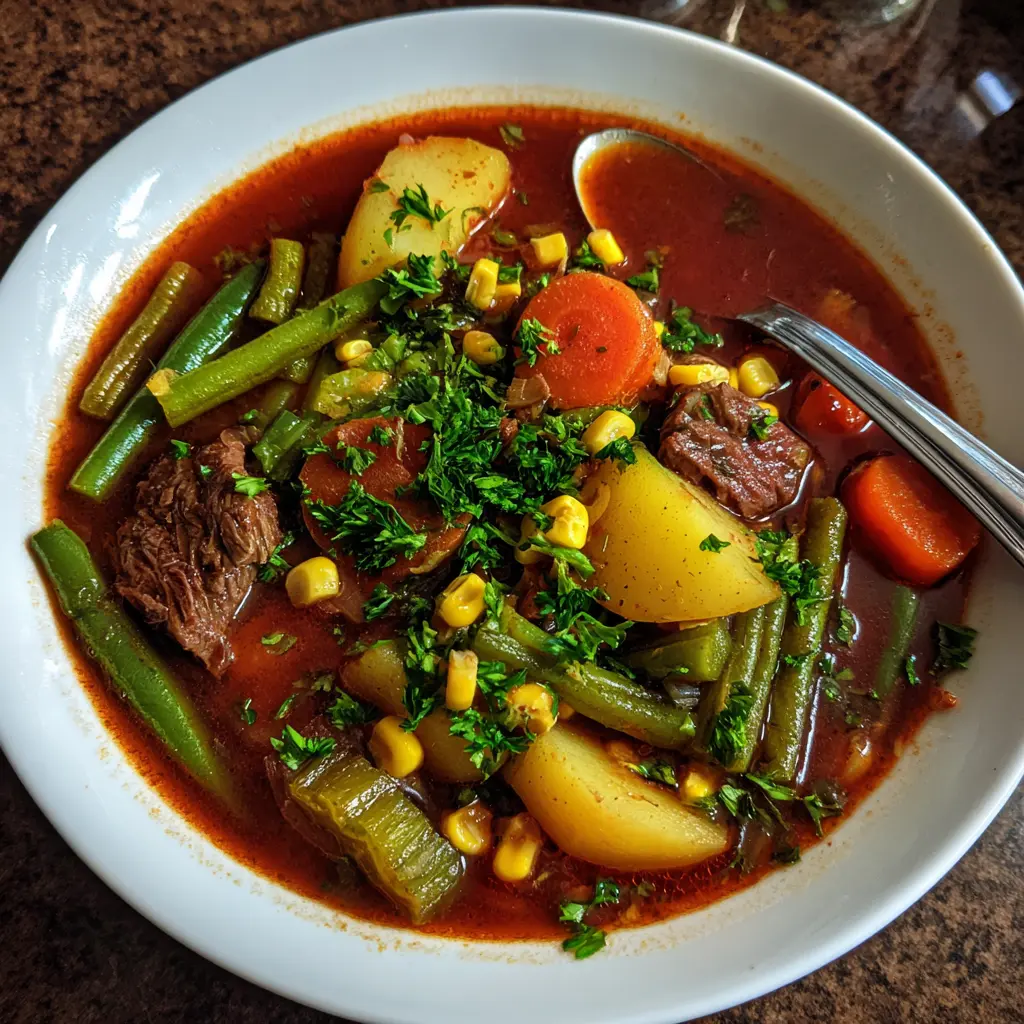
There’s nothing quite like a warm bowl of soup to bring comfort, and this beef vegetable soup recipe delivers big on flavor and coziness. Imagine rich, savory broth, tender chunks of beef, and a colorful medley of fresh vegetables. This classic dish is incredibly versatile, surprisingly easy to prepare, and a guaranteed crowd-pleaser that fits perfectly into any busy schedule.
Why You’ll Love This Beef Vegetable Soup
- Flavorful: Enjoy a deeply savory broth that’s simmered to perfection, infusing every bite with rich, hearty beef and aromatic herbs.
- Hearty & Filling: This substantial beef soup is a complete meal on its own, packed with protein and vegetables to keep you satisfied.
- Nutritious: Loaded with a vibrant assortment of vegetables, it is an excellent way to get your daily dose of vitamins and fiber.
- Versatile: Easily adapt this delicious beef vegetable soup recipe by swapping in your favorite seasonal vegetables or whatever you have on hand.
- Perfect for Meal Prep: It tastes even better the next day, making it ideal for leftovers and convenient weekday lunches.
According to WebMD, vegetables are a rich source of vitamins, minerals, and fiber that help keep your body healthy and prevent illness.
Ingredients
Making a delicious beef vegetable soup recipe starts with fresh, quality ingredients. Gather these items, and you will be on your way to a comforting meal.
- 1 1/2 lbs beef stew meat
- 2 1/2 Tbsp olive oil, divided
- Salt and freshly ground black pepper
- 1 3/4 cups chopped yellow onion (1 large)
- 1 1/4 cups peeled and chopped carrots (3 medium)
- 1 cup chopped celery (3 medium)
- 1 1/2 Tbsp minced garlic (4 cloves)
- 8 cups low-sodium beef broth or chicken broth
- 2 (14 oz.) cans diced tomatoes
- 1 1/2 tsp dried basil
- 1 tsp dried oregano
- 1/2 tsp dried thyme
- 1 lb red or yellow potatoes, chopped into 3/4-inch cubes
- 1 1/2 cups (5 oz.) chopped green beans (trim ends first)
- 1 1/2 cups frozen corn
- 1 cup frozen peas
- 1/3 cup chopped fresh parsley
Notes & Substitutions
Beef: For the most tender results in this hearty beef and vegetable stew, choose well-marbled beef stew meat. You can also dice a chuck roast yourself. If using ground beef, brown it and drain the fat before adding.
Broth: Low-sodium beef broth gives you control over the final salt content. Chicken broth works too if you prefer a lighter base.
Vegetables: Feel free to customize. Swap fresh corn and peas for frozen. Consider adding cabbage, parsnips, green beans, or even fresh spinach toward the end of cooking.
Herbs: A good quality Italian seasoning blend can easily replace the individual dried basil, oregano, and thyme.
Fat: Olive oil is a great choice for searing and sautéing. You can also use unsalted butter for a richer flavor.
Equipment
You will not need much specialized equipment for this amazing beef vegetable soup recipe. Gather these basic kitchen tools to make the process smooth and easy.
- Large Dutch oven or stock pot
- Cutting board and sharp knife
- Measuring cups and spoons
- Wooden spoon or spatula
Instructions
Follow these simple steps to make your beef vegetable soup recipe perfect every time. This straightforward process ensures a flavorful and tender result, ideal for beginners.
First, heat 1 tablespoon of olive oil in a large pot or Dutch oven over medium-high heat. While it heats, dab your beef stew meat dry with paper towels and season it generously with salt and pepper. Add half of the seasoned beef to the hot pot. Brown the beef for about 4 minutes, turning it once halfway through, until a nice crust forms. This searing step is crucial for developing deep flavor in your homemade beef vegetable soup.
Transfer the browned beef to a plate and set it aside. Add another 1/2 tablespoon of olive oil to the pot. Repeat the browning process with the remaining half of the beef, then transfer it to the same plate.
The USDA provides essential tips for safe food handling and preparation to prevent foodborne illness.
Now, add the final 1 tablespoon of olive oil to the empty pot. Toss in the chopped onions, carrots, and celery. Sauté these aromatics for 3 minutes until they begin to soften. Stir in the minced garlic and sauté for just 1 minute longer until fragrant, being careful not to burn it.
Pour in the beef broth and diced tomatoes, scraping up any browned bits from the bottom of the pot. Return the browned beef to the pot, along with the dried basil, oregano, and thyme. Season with additional salt and pepper to taste. Bring the mixture to a boil, then reduce the heat to low, cover the pot, and let it simmer for 30 minutes, stirring occasionally.
Next, add the chopped potatoes to the soup. Continue to simmer, covered, for another 20 minutes. If you prefer very soft green beans, you can add them at this stage as well.
Stir in the fresh chopped green beans (if not added earlier). Simmer for 15 minutes longer, or until all the vegetables and beef are tender to your liking.
Finally, pour in the frozen corn and peas. Simmer for about 5 minutes, just until they are heated through. Remove the pot from the heat and stir in the fresh chopped parsley. Taste your beef vegetable soup and adjust seasonings as needed, adding more salt or pepper if desired. Serve warm and enjoy!
Pro Tips & Troubleshooting
Browning Beef: Do not skip browning the beef! This step creates a rich, complex flavor base for your beef stew soup. Work in batches to avoid overcrowding the pot, which would steam the meat instead of searing it.
Vegetable Tenderness: Adjust simmering times for your preferred texture. If you like firmer vegetables, add items like green beans and carrots later. For very soft vegetables, add them with the potatoes.
Seasoning: Always season throughout the cooking process. Taste your soup before the final addition of salt and pepper to ensure the flavors are balanced perfectly.
Broth Consistency: If your soup is thinner than you like, remove the lid and simmer it uncovered for the last 15-20 minutes. This allows some liquid to evaporate, thickening the broth naturally.
Preventing Mushy Vegetables: Delicate vegetables like spinach or fresh herbs should be added right at the end of cooking, just before serving, to retain their texture and vibrant color.
Serving Suggestions, Storage, & Variations
This simple beef soup is incredibly versatile. Here are some ideas to make it even better.
Serving Suggestions
- Pair your soup with warm, crusty bread or soft dinner rolls for dipping.
- Serve it alongside homemade cornbread or fluffy biscuits.
- A light, fresh green salad can provide a nice contrast to the hearty soup.
Storage & Freezing
Refrigeration: Store any leftover beef vegetable soup in an airtight container in the refrigerator for up to 3-4 days. The flavors often deepen overnight.
Freezing: This soup freezes beautifully! Allow it to cool completely, then transfer it into freezer-safe containers or bags. It will keep for up to 3 months. Note that potatoes may become slightly softer in texture after freezing and thawing, but the taste remains excellent.
Variations
Slow Cooker Beef Vegetable Soup: Brown the beef and sauté aromatics on the stovetop first. Then, combine them with liquids and non-frozen vegetables in your slow cooker. Cook on low for 6-8 hours or high for 3-4 hours. Add frozen vegetables during the last 30-60 minutes.
Ground Beef Vegetable Soup: Instead of stew meat, use 1 ½ lbs of browned and drained ground beef. Reduce the initial simmer phase to about 15-20 minutes, as ground beef cooks much faster.
Other Vegetables: Get creative! Add chopped cabbage, hearty parsnips, butternut squash, or even fresh spinach or kale during the last 10 minutes of cooking.
Grain Options: Stir in 1/2 cup of uncooked rice, small pasta, or barley with the potatoes. You may need to add a little extra broth or water, as grains absorb liquid.
Nutrition Information
This hearty beef vegetable soup is a well-balanced meal. It provides essential nutrients to keep you fueled and satisfied throughout the day.
| Nutrient | Amount Per Serving (Estimated) |
|---|---|
| Calories | 350 |
| Protein | 30g |
| Fat | 15g |
| Saturated Fat | 5g |
| Carbohydrates | 25g |
| Fiber | 5g |
| Sodium | 600mg |
Estimates based on 8 servings and general ingredient data. Actual values may vary.
Frequently Asked Questions (FAQ)
What kind of beef is best for beef vegetable soup?
Chuck roast, beef stew meat, or a fatty cut like short ribs work best. Their marbling ensures the meat becomes wonderfully tender after simmering.
Can I use fresh vegetables instead of frozen?
Absolutely! Feel free to use all fresh vegetables. Just adjust the cook times slightly; harder vegetables like carrots and potatoes need more time than softer ones like peas or corn.
How do I prevent my vegetables from becoming too soft?
Add vegetables in stages, according to their firmness. Harder vegetables go in earlier, while softer ones like corn and peas are added toward the end of cooking.
Can this soup be made ahead of time?
Yes, this beef vegetable soup recipe tastes even better the next day. The flavors have more time to meld together, making it a perfect meal prep option.
Is beef vegetable soup healthy?
Yes, it is packed with lean protein and a wide variety of vegetables, offering essential vitamins, minerals, and fiber. It is a very nourishing and wholesome meal.
Conclusion
This hearty beef vegetable soup recipe is truly a winner. It combines robust flavors, tender beef, and a colorful array of nutritious vegetables into one satisfying bowl. Whether you are seeking comfort on a chilly day or simply looking for an easy, flavorful meal, this recipe delivers every time. We hope you enjoy making and sharing this wonderful soup with your loved ones!
