
Welcome to the wonderful world of homemade sourdough! This sourdough focaccia recipe is a true delight, offering a soft, airy interior and a gloriously crispy crust rich with olive oil. It’s incredibly satisfying to pull a warm, aromatic loaf from your own oven. Even if you’re new to sourdough baking, this recipe is designed to be beginner-friendly. Get ready to enjoy the unique tangy flavor that only a long-fermented sourdough brings to this rustic Italian bread.
Why You’ll Love This Sourdough Focaccia
Baking bread doesn’t have to be complicated to be rewarding. This easy sourdough focaccia recipe is a fantastic introduction to sourdough baking for many reasons:
- Simple Shaping: You won’t deal with intricate shaping or scoring. Just a few gentle folds are all it takes.
- No Special Equipment: Forget about a Dutch oven! All you need is a basic baking pan.
- Rich Flavor Profile: The slow fermentation develops a deep, complex, tangy flavor that store-bought breads can’t match.
- Perfect Texture: Enjoy a wonderfully chewy interior contrasted by a crisp, golden-brown bottom crust.
- Incredibly Versatile: It’s ideal for dipping, sandwiches, or as a flavorful side for any meal.
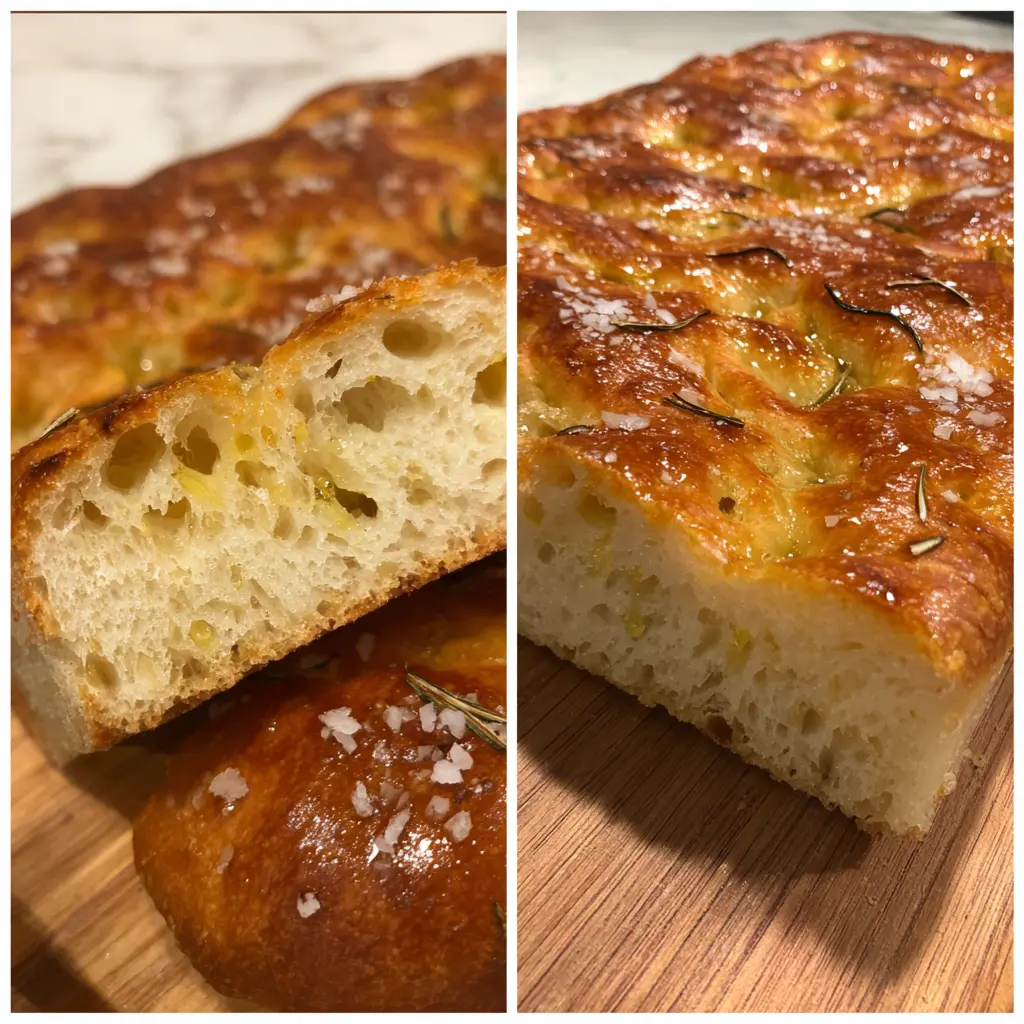

Easy Sourdough Focaccia Recipe for Beginners
Ingredients
Equipment
Method
- Prepare the Dough: In a large bowl, combine the active sourdough starter, salt, and water. Stir until combined, then add the bread flour. Mix until no dry spots remain. Optionally, perform stretch and folds after 30 minutes to build gluten.
- First Rise (Bulk Fermentation): Drizzle olive oil over the dough, cover, and let rise at room temperature (70°F / 21°C) for 4–18 hours until nearly doubled and puffy.
- Prepare the Pan: Add 2 tablespoons of olive oil to a 9×13-inch metal baking pan. This ensures a crisp bottom crust.
- Shape and Transfer Dough: Drizzle dough with olive oil, gently deflate, and fold envelope-style. Transfer to pan seam-side down and coat the top with oil.
- Second Rise: Let the dough rise uncovered for 4–6 hours until puffy and almost doubled, filling most of the pan.
- Dimple and Season: Preheat oven to 425°F (220°C). Oil your hands and dimple the dough with your fingers. Sprinkle with flaky sea salt and any desired toppings.
- Bake: Bake for 20–25 minutes or until golden brown. Transfer to a cooling rack and rest for 20 minutes before slicing.
Notes
Ingredients
Gather these simple ingredients to create your beautiful homemade sourdough focaccia recipe:
- 50-100 g active sourdough starter (1/4 to 1/2 cup), see notes below
- 10 g kosher salt (about 2.5 teaspoons)
- 430-440 g water (1.75 cups – 1.75 cups + 2 tablespoons), room temperature, see notes below
- 512 g bread flour (about 4 cups), see notes below
- 3 tablespoons extra-virgin olive oil, divided, plus more for drizzling
- Nice, flaky sea salt, such as Maldon
Notes & Substitutions
An active sourdough starter is one that has been fed 4-12 hours prior and has doubled in size, showing many bubbles. It should pass the float test, meaning a small piece floats in water. Use less starter (50g) if your kitchen is warm or you plan a longer bulk fermentation; use more (100g) if it’s cooler or you want a faster rise.
For water, filter it if your tap water is heavily chlorinated, as chlorine can inhibit yeast activity. Ensure it’s at room temperature (around 70-75°F / 21-24°C).
Scientific studies highlight that sourdough fermentation can offer numerous nutritional benefits, including improved nutrient bioaccessibility.
Bread flour is best for its higher protein content, which builds strong gluten for a chewy texture and airy crumb. All-purpose flour can work, but you might need to slightly reduce the water (by 10-20g) if the dough seems too slack. Feel free to use flaky sea salt like Maldon for a superior texture and burst of flavor; kosher salt also works well for the initial mix.
Equipment
You don’t need fancy tools to bake this incredible focaccia. Here’s what you’ll need:
- Digital kitchen scale: Essential for accurate measurements.
- Large mixing bowl with a lid or cover.
- 9×13-inch baking pan: Metal is highly recommended for best results.
- Rubber spatula or dough scraper: For mixing and handling the dough.
- Cooling rack: Crucial for allowing your focaccia to cool properly.
Instructions for Your Sourdough Focaccia Recipe
Follow these simple steps to bake a mouthwatering sourdough focaccia recipe right in your home kitchen.
Prepare the Dough
First, combine the active sourdough starter, kosher salt, and room temperature water in a large mixing bowl. Stir them together with a spatula until loosely combined. Next, add the bread flour to the bowl. Mix everything thoroughly until the flour is completely incorporated and no dry spots remain.
If you have a bit more time, perform an optional stretch and fold. About 30 minutes after mixing, reach into the bowl, grab a portion of dough, stretch it upwards, and fold it towards the center. Rotate the bowl a quarter turn and repeat this process 8 to 10 times to help build gluten strength.
First Rise (Bulk Fermentation)
Drizzle a splash of olive oil over the dough and gently rub it to coat. Cover the bowl with a tea towel or a snug-fitting lid. Let the dough rise at room temperature, ideally around 70°F (21°C). This first rise, known as bulk fermentation, can take anywhere from 4 to 18 hours. The exact time depends on your kitchen temperature and the strength of your starter. For instance, in warmer weather, it might double in 6 hours, while in colder conditions, it could take up to 18 hours. Look for visual cues: your dough should appear puffy and nearly doubled in volume. Avoid using an oven with the light on, as it can be too warm. A straight-sided container is excellent for monitoring this rise precisely.
Prepare the Pan
Once your dough has completed its first rise, prepare your baking pan. Pour 2 tablespoons of extra-virgin olive oil into a 9×13-inch metal pan. This generous amount of oil contributes to the focaccia’s signature crispy bottom. If you are using a glass pan, you might want to butter it first as a precaution against sticking; I’ve had better luck with metal pans for this recipe.
Shape and Transfer Dough
Gently drizzle the risen dough with an additional tablespoon of olive oil. Use your hand to lightly deflate the dough and release it from the sides of the bowl. Carefully scoop the dough directly into the center of the oiled baking pan. Fold the dough envelope-style: bring the top down, the bottom up, and then each side towards the middle, forming a rough rectangle. Turn the dough over so the seam-side is facing down. Rub the top of the dough with the olive oil to coat it.
Second Rise
Leave the dough uncovered in the pan for its second rise. This will take approximately 4 to 6 hours at room temperature. During this time, the dough will become visibly puffy and almost doubled in size again, filling out the pan.
Dimple and Season
When the dough looks ready and about an hour before baking, preheat your oven to 425°F (220°C). Lightly rub your hands with olive oil. Using all ten fingers, gently press down into the dough to create those characteristic focaccia dimples. As you dimple, gently stretch the dough until it nearly fits the entire pan. Finally, sprinkle the dough generously with flaky sea salt.
Bake
Carefully transfer the baking pan to your preheated oven. Bake the focaccia for about 20-25 minutes, or until the top is beautifully golden brown all around. Once baked, immediately remove the pan from the oven and transfer the hot focaccia to a cooling rack. Allow it to cool for at least 20 minutes before slicing and serving. This resting time helps the internal structure set and improves the texture.
Pro Tips for Perfect Sourdough Focaccia
Achieving a perfect sourdough focaccia recipe is within reach with these helpful hints:
- Monitoring Bulk Fermentation: For precise measurement, transfer your dough to a clear, straight-sided container with volume markings. This makes it easy to see when it has truly doubled.
- Hydration Adjustments: If your dough feels overly sticky after mixing, add a tablespoon more flour. If it seems too stiff or dry, add a tablespoon more water, especially when using different types of flour.
- Pan Choice Matters: A metal baking pan, like a dark-coated or cast iron one, conducts heat more efficiently than glass. This results in a superior, crispier bottom crust, a hallmark of excellent focaccia.
King Arthur Baking provides a helpful guide on flour protein percentages and their impact on gluten development.
- Float Test Your Starter: To confirm your sourdough starter is active and ready, drop a small piece into a glass of water. If it floats, it’s good to go!
- Flavor Boosters: Enhance your focaccia by drizzling it with garlic-infused olive oil or a sprinkle of dried herbs like oregano before dimpling and baking.
Serving, Storage, and Variations
This versatile sourdough focaccia recipe is wonderful on its own or as a foundation for many culinary creations.
Serving Suggestions
- Enjoy slices warm with a generous drizzle of your finest olive oil.
- Serve it as a rustic side dish alongside hearty soups or your favorite pasta.
- Use it to make incredible sandwiches, or toast it for a delightful crunch.
- It pairs beautifully with a platter of cheese and charcuterie for entertaining.
Storage Instructions
- Store leftover focaccia at room temperature in an airtight bag or container for up to 3 days.
- For longer storage, slice the cooled focaccia and freeze individual pieces in freezer-safe bags.
- To reheat, place slices in a preheated oven at 350°F (175°C) for a few minutes until warmed through and crisp.
Flavor Variations
- Add fresh rosemary sprigs, minced garlic, or pitted olives to the dough before the second rise or press them into the dimples.
- Top with halved cherry tomatoes or thinly sliced red onions for vibrant color and flavor.
- Experiment with other herbs like thyme, or sprinkle with grated Parmesan or feta cheese.
Other Uses for the Dough
- This versatile dough can also be shaped into a delicious sourdough sandwich bread loaf.
- Try forming it into rustic sourdough peasant bread loaves for a different texture and crust.
Nutrition Information
Please note, this information is an estimate and can vary based on specific ingredients and serving sizes. This calculation assumes 12 servings per loaf for this sourdough focaccia recipe.
| Nutrient | Amount Per Serving (approx.) |
|---|---|
| Calories | 250 kcal |
| Carbohydrates | 45 g |
| Protein | 8 g |
| Fat | 5 g |
| Saturated Fat | 1 g |
| Sodium | 200 mg |
Disclaimer: Nutritional values are approximate and may vary depending on exact ingredients used and preparation methods. This table is for informational purposes only.
Frequently Asked Questions (FAQ)
What is an active sourdough starter?
An active starter has been fed recently, is bubbly, has doubled in volume, and passes the float test (a small piece floats in water). It signifies that the yeast and bacteria are highly active and ready for baking.
Why is my sourdough focaccia dough so sticky?
Sticky dough can result from high hydration, which is common in focaccia. It can also indicate insufficient gluten development, so ensure you’re mixing thoroughly and consider the optional stretch and folds.
Can I prepare this sourdough focaccia ahead of time?
Absolutely! You can cold ferment the dough in the refrigerator for the bulk fermentation stage. This extends the rise time significantly, from 12-24 hours, and develops even more complex flavors.
What is the best type of flour for focaccia?
Bread flour is generally preferred due to its higher protein content, which creates strong gluten. This leads to a chewier texture and better structure for focaccia’s characteristic open crumb.
Can I add other toppings to the focaccia?
Yes, be creative! Popular toppings include fresh herbs like rosemary and thyme, olives, cherry tomatoes, sliced red onion, or even a sprinkle of Parmesan cheese.
Other Uses for the Dough
- This versatile dough can also be shaped into a delicious sourdough sandwich bread loaf.
- Try forming it into rustic sourdough peasant bread loaves for a different texture and crust.
Conclusion
Baking this homemade sourdough focaccia recipe is a truly rewarding experience, offering both simplicity and incredibly delicious results. You’ll love the aroma that fills your kitchen and the satisfaction of pulling a golden, crusty loaf from the oven. This versatile bread is perfect for sharing, enjoying on its own, or as a base for countless meals. Don’t hesitate to give this beginner-friendly recipe a try. Share your creations with us and explore more delightful sourdough recipes!
